 |
 |
Cycle and Walking Route Books
 |
2. Miles Without Stiles Guides
3. All Terrain Push Chair Walks
4, Explore the Peak District
5. Keeping Balance
Standing on the shoulders of giants...
If you are new to handcycling or bike or trike riding there are some books that will help you quite a bit in finding good places to cycle or crank. We are identifying and describing some of the routes that we have enjoyed on this web site. However, it is not possible for us to provide any thing like a comprehensive coverage. You need to be able to identify and check out the routes that will suit you. This can be an enjoyable, satisfying and empowering experience – we have found it to be so. On the other hand, it has to be admitted that the books and guides that can help with this are more limited than we would wish. If you are an able-bodied cyclist or walker there is a huge resource of books and guides to help you plan your outings. This is not quite the case for those of us with disabilities. Those books that will help you on your way are therefore all the more important and highly valued.
Also included here is information on a book about coping with disability - Keeping Balance.
1. Cycling Without Traffic
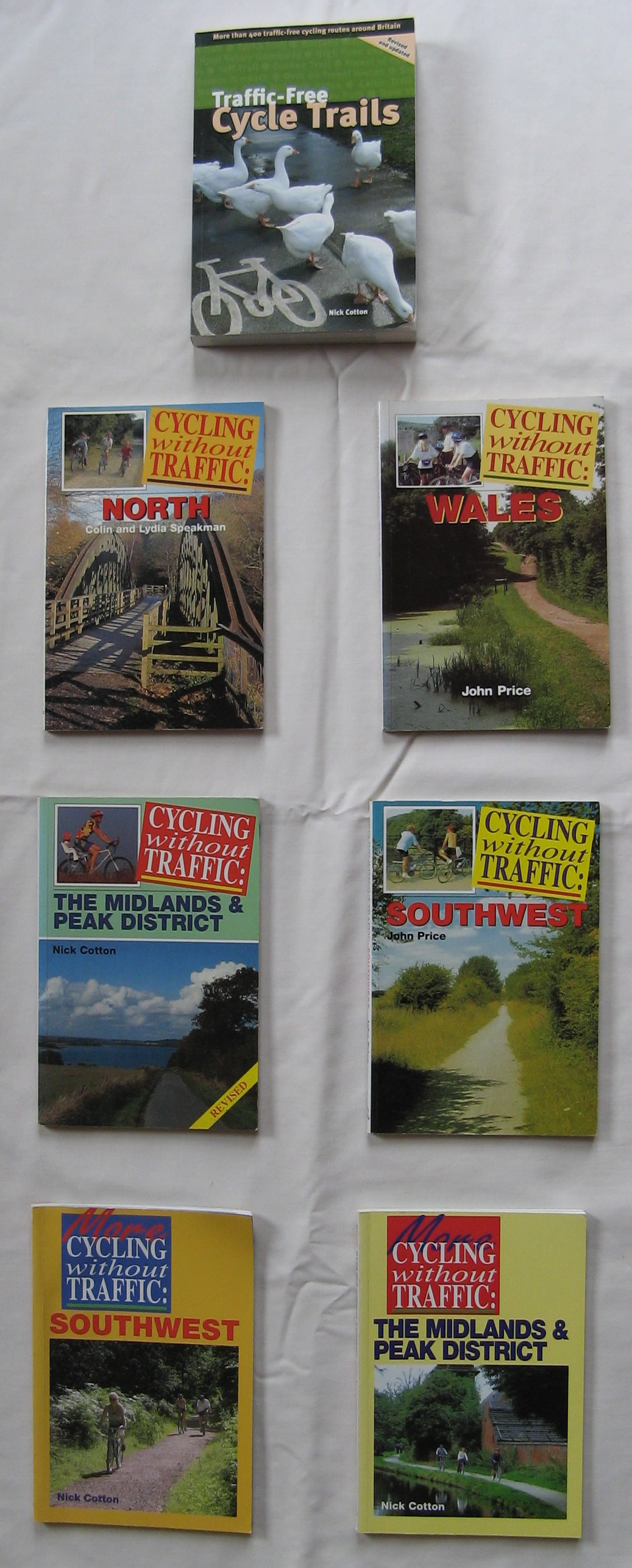
The book I want to start with is Traffic Free Cycle Trails by Nick Cotton. It is also available as an e-book. There have ben several editions of this book so it haas kept up with the development of new routes. The cover description is ‘More than 400 traffic-free cycling routes around Britain’. Yes, there really are that many and quite a proportion of them are FANTASTIC rides! They comprise canal side paths, country parks, forestry routes, promenades, and most importantly, old railway trails. The book is excellent in that it gives information about all of these routes. The down side is that being so comprehensive it can only provide brief details on each route. We have sometimes found that finding the start of the route can be difficult! To be fair, though, full information is provided about further resources for each route (e.g web sites of local authority publications). You just have to be sufficiently organised to search this out in advance!
Nick Cotton has written other books about traffic free cycling and more than 40 cycling books overall. There was a series called CYCLING without TRAFFIC with individual books covering WALES, NORTH, THE MIDLANDS & PEAK DISTRICT, SOUTHEAST and SOUTHWEST, by Nick Cotton and other authors, and published Ian Allan Publishing of Dial House. There was a second series, 'MORE CYCLING...' for both the Midlands and Peak District, and the South West. These had the advantage of giving more detailed information about each ride, but, of course, you needed more of them to give the coverage of 'Traffic Free cycle Trail' and Scotland was not included in the series. These books were a useful resource, and it is a pity that they now appear out of print. But all is not lost – second hand copies are likely to be available from ABE Books and others via the internet.
There are some newer guides emerging – although not quite a replacement for the set identified above. The indefatigable Nick Cotton has produced three new guides. These are Cycling Traffic Free – Midlands and Peak District, and South East and Home Counties. These were published in 2010 but Nick Cotton is a prolific publisher so it is likely that he will have covered more areas since then. These guides are based around the Sustrans cycling network so not all routes included will be traffic free. I haven’t examined any copies so cannot report in detail.
Of course cyclists with disabilities are in no way restricted to traffic free routes. Almost all the cycling we do around our home base is on quiet back roads. However, many new riders with disabilities might initially feel more comfortable on routes away from traffic. There are other advantages in that they are usually easy riding without demanding hills!
2. Miles Without Stiles Guides
Anybody who has investigated this web site will appreciate that we like to get out and about. Riding cycle trails or quiet back roads on our tandem trike is one of the ways in which we do this. But we also like to get INTO the countryside on bridle paths or other paths that are accessible. When we do this I am using my handcycle and Pete is walking alongside so we are in 'pedestrian mode'.
For ordinary able bodied walkers there are many guides available that identify routes at various levels of difficulty, especially in the more scenic parts of the countryside. The major lack is that there are no independently published collections of routes specifically dedicated to providing guidance for the disabled rambler.
Of course, there are real, often inevitable difficulties, if you are trying to access the countryside with wheels. Paths can be impossibly rough or uneven, be too steep or too narrow for easy wheeled progress. There are also the artificial barriers such as stiles, many kissing gates and steps. Help and guidance is needed for finding suitable accessible routes. Undoubtedly published and internet information is improving, but it is not yet good enough!
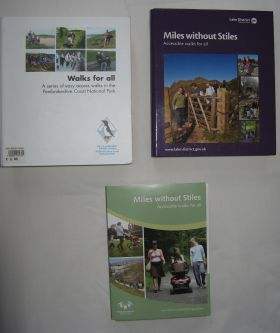
For us the gold standard in terms of what we have found available is 'Miles without Stiles' published by the Lake District National Park Authority. The immediate reaction might be that the Lake District is full of mountains, so how can it provide good routes for disabled access? But, of course, where there are mountains there are also valleys, and these can provide good routes with beautiful scenery all around.
This guide is exceptional in that it provides a large number of routes (currently over 40) of different lengths, and different levels of difficulty. The routes are very clearly described, and provided in a hard back loose leaf binder, with the facility to extract the route you are using to be placed in a plastic temporary cover.
Many of the other national parks now also provide useful accessible route information. Two that we know and have found useful are from the Yorkshire Dales (17 routes) and the Pembrokeshire Coast National Park (15 routes). They are certainly worth investigating, even if they do not reach the standard of that offered by the Lake District National Park.
Some local authorities also provide guidance on accessible routes, but these are even more variable. I think that Cheshire provides two of the best 'Walks for All' booklets, providing guidance for Cheshire East and Cheshire West, the two areas into which the county is now divided. Thus chasing up your local County's tourist & recreation department might be useful.
3. All Terrain Push Chair Walks
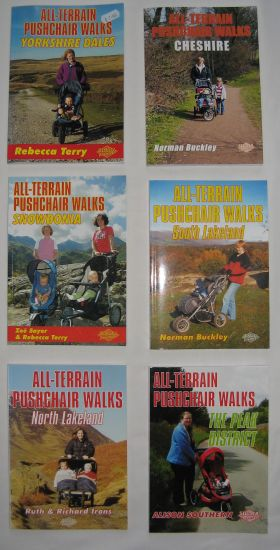
Usefully, we discovered an alternative set of publications that we have found very helpful when visiting a new area. These are not guides for wheelchair users, but for push chair pushers. They comprise the quite extensive series of books about 'All Terrain Pushchair Walks', published by Sigma Leisure. The accessibility requirements for pushchair are not identical with those for wheelchairs or hand cycles, but there is some common ground. The 'walk' routes are described in some detail and sufficient information is provided you to allow a reasonable selection of those that should provide disabled access. There were over fifteen books in the series when we were using them so that a good range of areas are covered from Argyll and Lochaber in the Scottish north to Hampshire and Sussex in the English south, but not neglecting some Welsh walking areas along the way. Currently the publishers only list 10 titles. However, World of Books is offering (August 2026) 13 of the titles at very low prices.
So, I think that those of us with access difficulties have to work harder to find routes that will suit, and there has to be a bit of trial and error. You definitely need to be prepared to turn back if things are not working out, but success provides considerable rewards.
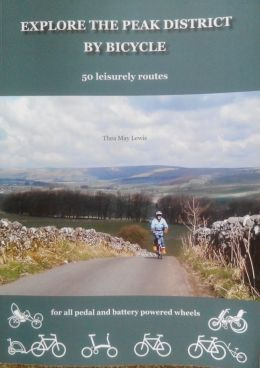
4. Explore the Peak District by Bicycle
By Thea Lewis (ISBN 9781527257849) Available as an e-book from Amazon or a paper book from the National Park Authority (If they still have any left - the paper copies were a 'trial run' )
Any visitor to our National Parks who is keen on being in the outdoors will no doubt be ready to do a little research in advance of their trip. For the keen able bodied walker the typical bookshop will have a host of guides. For the ‘lads in lycra’ cyclists there will also be a reasonable collection of guides, but when it comes to parents with youngsters and the less than able bodied the choice is usually very thin. In that area the 'All Terrain Pushchair Walks' deserve a mention as does the Lake District National Park’s ‘Miles without Stiles’ collection. Happily, there is now a nice fat volume to fill that particular gap for the Peak District.
Thea Lewis’s book is available as an Amazon format e-book and is now to be found in bookshops as a real book in A4 format. It is available from the Peak District National Park centres for £10, also from other visitor centres, some local bookshops or direct from the author (plus postage and packing, (email bitryke@gmail.com). Physically, the book is in the ‘coffee table volume’ category but is full of good colour pictures, clear maps and uses a nice clear font that is easy to read.
So, what of the content? As a logger and writer of route guides for the less than able bodied, I felt well qualified to comment. I began by reading about all the rides that I know well. That was enlightening as the routes are well described and mapped and come with the important but often neglected information about toilets, refreshments, gradients, gates, parking and so on. An added bonus is that each of the routes comes with local information that will enhance any ride and encourage the rider to look carefully at the landscape and the villages. Did you know that you can ride up to the top of a coral reef? No, me neither!
Having read about the well known routes I carried on into the unknown routes. These make interesting reading in their own right and, with the additional information about the locale, can act like a guide book to the Peaks. There are also little tips about good times to ride routes so as to minimise the likely encounters with traffic. There are useful tips for crossing difficult roads which must be done on occasion. Reading these guides one soon could develop a list of ‘must do’ rides.
Bearing in mind that this book is aimed at the leisure cyclist it would not be unreasonable to nick-name it “Miles without Cars”. The routes are all on minor roads, cycle paths and off road tracks. The latter are well described with advice for those using tricycles and other multi wheel transport. Indeed the book also includes a guide to opening the typical National Park path gate from a wheelchair/trike. Thea has been very creative in making use of the landscape. Thus the inevitable hills of the Peak District are climbed on the gentlest possible gradients with the return leg taking the steeper route. Emphasis is also placed on enjoying the views with good perspectives pointed out.
Part of the book also explores possible equipment for parents with young children and the less than able bodied cyclist. It briefly considers child seats, tag-alongs, hand cycles, e-bikes and trikes, etc. Some of this kit can be hired from the National Park Centre at Parsley Hay which is a useful opportunity to find out what is most suitable for a person’s needs. This is good solid information based on the author’s own experiences of using such equipment ‘in the field’.
My conclusion is that this book fills a useful niche and is worth buying for a bit of day dreaming when there is horizontal wind and rain outside and for serious outing planning when the weather looks promising.
Pete Cuthbert
5. Keeping Balance
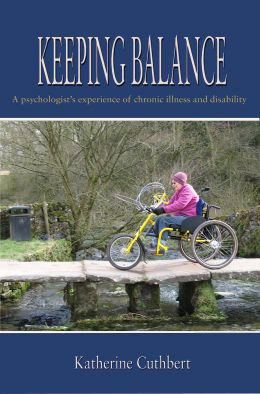
Have you newly been afflicted by disability? Do you enjoy finding out how other people have coped? If so, these reflections of a psychologist on coping with chronic illness and keeping cycling could be of interest. The book makes a good read, but also shows how positive psychology can be applied to the coping process. It is neither misery lit nor an over-optimistic self-help book.
Keeping Balance by Katherine Cuthbert is available for most second hand bookshops or direct from us (send us an email to request a copy - we have a few left over), ISBN 978-1-84876-2091.
Read a review of the book by Angela Lyons.
Try a sample chapter for yourself: